Activities
Since its foundation in 2001, the FSFE has been working every single day to further software freedom in Europe and beyond. Beside the activities below, a large part of our work consists of continuous engagement and background work contributing at events and answering questions and enquiries around software freedom.
Our vision is that everyone has the right to remove and install any software on any of their devices (Device Neutrality), that licensing and legal decisions are based on facts, rather than fear, uncertainty, and doubt (Legal Education), that all regulatory frameworks encourage the use and development of Free Software (Market Regulations), that all public funding for software is used for Free Software only (Public Money? Public Code!), that people enjoy to contribute to FSFE and feel empowered and effective (Volunteer Engagement), and that young people have the opportunity to tinker, experiment and code with Free Software as the default (Young Generation).
Public Money? Public Code!
Why is software created using taxpayers' money not released as Free Software? We want legislation requiring that publicly financed software developed for the public sector be made publicly available under a Free and Open Source Software licence. If it is public money, it should be public code as well. Code paid by the people should be available to the people!
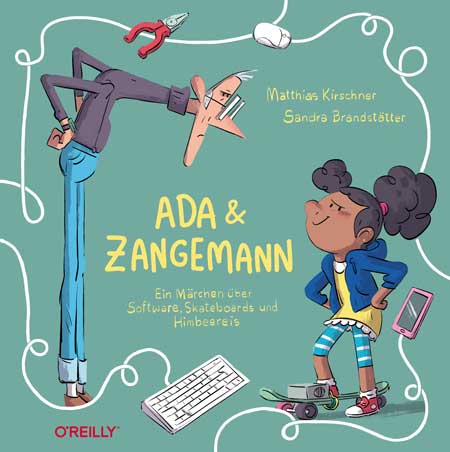
"Ada & Zangemann" book and movie
The illustrated book animated movie "Ada & Zangemann - a tale of software, skateboards, and raspberry ice cream" by the FSFE, tells the story of the famous inventor Zangemann and the girl Ada, a curious tinkerer. Ada begins to experiment with hardware and software, and in the process realises how crucial it is for her and others to control technology.
Youth Hacking 4 Freedom
Young people, from all over Europe, compete in Youth Hacking 4 Freedom to win cash prizes by creating programs of their choice licensed as Free Software. The six winners will be invited to the Award ceremony weekend. Youth Hacking for Freedom inspires people to learn programming and to collaborate.
REUSE Software
The FSFE is running a project to make licensing easy for humans and machines alike. It solves a fundamental issue that Free Software licensing has at the very source: what license is a file licensed under, and who owns the copyright? REUSE provides easy recommendations in three steps that help users, developers and legal professionals.
I Love Free Software
We often underestimate the power of a simple Thank You. Free Software contributors do important work for our society and the "I Love Free Software Day" on 14 February is the perfect opportunity for you to express your special gratitude. Since 2010, we have celebrated this wonderful annual event with an ever-growing and diverse community. ♥ ♥ ♥
DMA: Apple Litigation
The FSFE is intervening to safeguard Free Software in a key court case involving Apple and the European Commission. Apple is trying to avoid obligations derived from the Digital Markets Act (DMA). The FSFE seeks to hold Apple accountable under the DMA in a developer-friendly way.
Device Neutrality
Although digital devices are ubiquitous today, the number of devices on which users cannot run Free Software is exponentially increasing. The consequence is an increased loss of control over users’ technology. Device Neutrality aims to enable end-users to bypass gatekeepers to have a non-discriminatory use of Free Software on their devices.
Digital Markets Act
Device Neutrality is the policy concept to regulate monopoly over devices and re-establish end-user control over their digital equipment. The Digital Markets Act (DMA) regulates the economic activity of large digital platforms and introduces Device Neutrality in the EU legislation, fostering access to Free Sofware in Devices.
FSFE 25
This year, the FSFE turns 25 and we celebrate it on the 18th and 19th of July in Kraków. In this activity you will find and overview of the agenda of the event, filled with talks, networking, and plenty of fun.
Router Freedom
Although we should be free to choose the technical devices we use in our private lives, some European Internet Service Providers are dictating which device their customers have to use to connect to the Internet, or discriminating against owners of alternative devices. This undermines our basic freedom of choice.
Free Your Android
Android is a mostly free operating system but unfortunately the drivers for most devices and most applications in the built-in store are not Free Software. This initiative helps you to regain control of your Android device and your data.
Next Generation Internet
The FSFE is a partner organisation of NGI, a coalition of non-profit organisations from across Europe. Funded by the EC, it provides grants to work on new ideas and technologies that contribute to the establishment of the Next Generation Internet. The FSFE provides legal support for these projects.
Licence Questions
The FSFE’s Licence Questions mailing list is our group of volunteers dedicated to provide help with Free Software licences and compliance. If you need advice on what Free Software licence you should use, or if you want to know more about what rights you have over a piece of Free Software, you can contact us.
Refund4Freedom
When acquiring a new laptop you often end up dealing with an imposed pre-installed Microsoft Windows operating system. This is unfair. The Refund4Freedom initiative guides users in how to get their money back in these cases and demands the end of this practice that limits user freedom.
Legal Network
The Legal Network is a neutral, non-partisan, group of experts involved in Free Software legal issues with currently several hundreds of participants from different legal systems, academic backgrounds and affiliations. The aim of the Legal Network is to promote discussion and foster better knowledge of the legal constructs that back Free Software.
More Activities
Fiduciary Programme
The Fiduciary License Agreement (FLA) allows software projects to assign copyrights to a named fiduciary for its effective management. This allows developers to focus on development rather than spending time on legal administration. While the FSFE is no longer accepting new projects under the Fiduciary Programme, we continue to offer customisable versions of the FLA for your use.
Upcycling AndroidFinished
Keep using your phone with Free Software. Upcycling Android explains the issue of software obsolescence in the Android world and helps people flashing their phones with Free Software operating systems.
20 Years FSFEFinished
In 2021, the Free Software Foundation Europe turned 20. Throughout this time we have empowered users to use, study, share, and improve software. In 20 Years FSFE, we thank everyone who helped us along the way. Here you will find interviews discussing the FSFE's progress as well as technological issues. You are welcome to celebrate with us!
Radio Lockdown DirectiveFinished
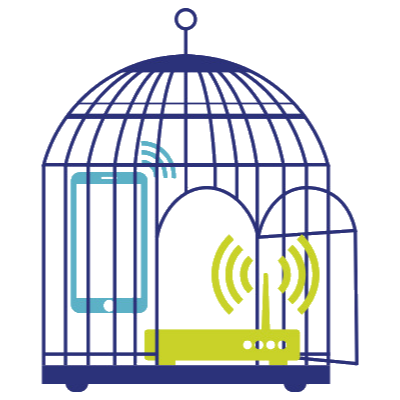
An EU regulation may make it impossible to install a custom piece of software on most radio devices like WiFi routers, smartphones, and embedded devices. It requires hardware manufacturers to implement a barrier that disallows users to install any software which has not been certified by them.
Electoral Activities
What could be a better time to ask politicians about their stance on Free Software and Open Standards than the run-up to an election? We believe we can and should raise these issues in all elections, European, national, regional and local. Depending on the electoral system and culture, we use different strategies and tools.
Software Patents in Europe
We are working towards a world where software does what software users want it to do. For this, software users must be able to participate in the development and distribution of the software. Software patents block this goal by adding legal and financial risks to software development and distribution and by giving the patent holders legal power to completely prohibit software developers from using the patented ideas.

The ZOOOM InitiativeFinished
The FSFE is part of these European consortium to promote and raise awareness about the importance of Free Software, Open Data, and Open Hardware among academia, business, industry, and innovation supporting organizations. As a big part of our work, we are promoting the REUSE specification as an important element for licensing compliance.

Learn like a pro
An initiative to bring Free Software in the education sector by increasing the digital sovereignty and competence of students and teachers. Created by the Zurich chapter, 'Lernen wie die Profis' was awarded the DINAcon Award. The activity is in German.
PDFreadersFinished
The PDFreaders initiative aims to shine a spotlight on government organisations that promote proprietary PDF readers. With the help of activists across Europe, we have contacted these organisations and told them how they can improve their websites to respect our freedom. On pdfreaders.org we present Free Software PDF readers for all major operating systems.
DRM.info
DRM.info is a collaborative platform initiated and maintained by the FSFE to inform about the dangers and concerns of the Digital Restrictions Management. Contributors to DRM.info include digital freedom, consumer protection, net activism and library organisations.
Microsoft vs. EU Antitrust CaseFinished
In 2001 the European Union started investigating Microsoft's dominant position in the market for desktop operating systems. The FSFE represented the interests of Free Software developer as a public interest organisation who cannot be bought off. Thanks to the excellent work by all involved parties, the case was won in all rulings up to the European Court of Justice in 2012.
FOSS4SMEsFinished
FOSS4SMEs was a two-year collaborative Erasmus+ project to spread and increase knowledge about Free Software. The FSFE collaborate with the other partners to develop free online educational resources for managers and employees of small and medium-sized enterprises (SMEs).
EURA Slovakia caseFinished
The Slovak company EURA faced fines of 5600 euros for not purchasing and use Microsoft Windows operating system for submitting electronic tax reports. The Slovak tax administration gave EURA the option to either buy and use Microsoft Windows or face the fines. The FSFE assisted in this case advocating for platform-neutral solutions for such procedures. Unfortunately, the court ruled against Free Software and Open Standards, but we were able to raise awareness about these wrongdoings in Slovakia and beyond.
Unlock Education in the NetherlandsFinished
This activity was specifically targeted at the Dutch education sector, with the aim of enabling citizens to have free access to education and public institutions, both online and offline. By promoting the mandatory use of Open Standards and platform-independent access to all materials, students and parents will be able fulfil their potential for personal growth and development without being dependent on a company.
AVM GPL violationFinished
Can a company modify GPL-licensed software on a third-party device? Router manufacturer AVM accused Cybits of copyright and trademark infringement for modifying the original router firmware, which is largely based on the Linux kernel. Together with gpl-violations.org, we successfully convinced the court that the terms of the GPL licence are binding: software under this licence can be freely modified and installed, even if it is supplied as part of the firmware of an embedded device.
Internet Governance Forum (IGF)Finished
The Internet Governance Forum (IGF) is a global policy discussion forum of the United Nations, established as an outcome of the UN World Summit on the Information Society (WSIS). FSFE followed the IGF to ensure that policy discussions will not endanger digital freedom in general and Free Software in particular.
SELFFinished
The SELF project (Science, Education and Learning in Freedom) aimed at creating a repository of educational materials on Free Software and Open Standards. It did this by providing a platform for the collaborative development of educational materials, as well as by engaging in the development of educational materials that were missing in the field today.
MS-OOXMLFinished
Since the beginning of the standardisation process for Microsoft's Office Open XML - OOXML (hereafter MS-OOXML), the FSFE has raised serious doubts about whether MS-OOXML can be considered open. FSFE was the first to raise the issue in the community, led the movement against the standardisation of MS-OOXML, and has been closely following developments over the years.
IPRED2Finished
A second Intellectual Property Rights Enforcement Directive was proposed by the European Commission. It aims to criminalise all "intentional, commercial-scale" infringements and allow rights holders to participate in investigations. The FSFE pointed out to the EU institutions how such laws encourage abuse of the legal system and have a chilling effect on law-abiding activities.
GPLv3Finished
The release of version 3 of the GNU General Public License (GPL) on 29 June 2007 marked the end of an eighteen-month public consultation process. During this time, the FSFE worked to raise awareness of the proposed changes to the licence, to help the community participate in the public consultation, and to document the ongoing discussion to make this issue as accessible as possible.
World Intellectual Property OrganizationFinished
The World Intellectual Property Organization (WIPO), one of the 16 specialised agencies of the UN system, administers 23 international treaties dealing with various aspects of limited monopolies on knowledge. As an observer to WIPO, and together with a global coalition of other actors, the FSFE worked to transform WIPO into a "World Intellectual Wealth Organisation".
World Summit on the Information Society (WSIS)Finished
The World Summit on the Information Society (WSIS) was a two-summit UN conference organised by the ITU to propose important cornerstones for the information and knowledge society. The FSFE participated with other civil societies to ensure that the principles of the digital age would protect digital freedom, knowledge sharing, access to information and Free Software.
Brave GNU WorldFinished
The Brave GNU World was a monthly column published from 1999 to 2004, addressed at both technical and non-technical readers. Its aim was to provide an insight into current projects and developments based on the Free Software philosophy. The Brave GNU World was translated into 9 languages, making it probably the most widely distributed monthly column in the world.
GNU Business NetworkFinished
The GNU Business Network had the vision to network all companies, developers and users in and around Free Software in a way that the potential synergies are encouraged and informed decisions become possible.
Classification of Free Software as a World Cultural HeritageFinished
The goal was to have Free Software classified by UNESCO as an Intangible World Heritage and registered in the World Memory Register (another UNESCO project). The Free Software community and UNESCO share the same values of freedom, equality and fraternity. Such recognition would be a great boost for Free Software.
AGNULA: A GNU/Linux Audio distributionFinished
The AGNULA project aimed to create a fully functional, completely Free Software GNU/Linux distribution for professional audio users. Run by key players in the audio community, and funded by the European Commission, the FSFE was a partner in the project, taking care of the legal issues, its long-term aspects, and making sure that the interests of the Free Software community were heard.
EUCD - Copyright extensions that harmFinished
The European Copyright Directive (EUCD) was the European equivalent of the US Digital Millennium Copyright Act (DMCA). These laws lead to the creation of monopolies and cartels, and pose serious obstacles to freedom of speech and the press by providing means for digital censorship. The FSFE has been actively involved in opposing such harmful legislation.
TUX&GNU@school columnFinished
The TUX&GNU@school column was a regular column about Free Software in education written by by Mario Fux. It informed about educational Free Software, useful web sites on the topic and other interesting topics for teachers, students and all software freedom advocates.
We speak about Free SoftwareFinished
Free Software is often referred to as "Open Source". But we are convinced that Free Software is the better term: easier to understand, harder to abuse, well-defined, providing additional value, and offering freedom. We connected companies, organisations and even co-founders of the Open Source movement that prefer to use the term Free Software.